

Increasing Sales, the Sales Funnel, and Website Conversion Rates
Every website owner strives to boost the popularity of their digital resource, maximize its efficiency, and increase sales. The fundamental components of a website's performance are the conversion rate and the sales funnel. Understanding these concepts allows you to directly influence your sales volume.
Website Conversion Rate
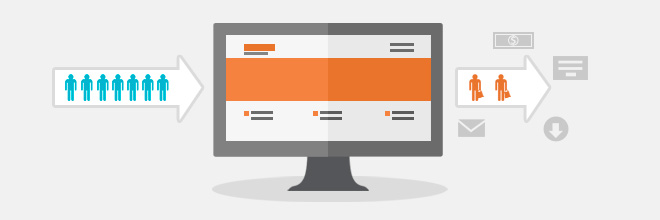
Website conversion is the most critical metric of its effectiveness. The conversion rate clearly demonstrates how many website visitors turn into actual paying customers for your company, store, or enterprise. It measures the percentage of users who take a desired action:
- download a specific product;
- purchase a particular item;
- subscribe to a newsletter;
- create an account;
- perform other targeted actions.
The Sales Funnel

The sales funnel illustrates how many website visitors drop off at each stage of the customer journey, highlighting users who leave without completing the desired action. The funnel consists of the following stages:
- How many unique users visited the website.
- How many of them performed the targeted actions you need.
- How many actually paid for the product or service.
At each of these stages, the number of participants decreases—this is exactly how a sales funnel is formed.
Boosting the Conversion Rate
Conversion rates and the sales funnel are the most crucial indicators of a website's success. It is the responsibility of every website owner to monitor these metrics, as they have a direct impact on revenue. By tracking changes in conversion rates, you can draw valuable insights. Knowing how to increase conversion, you must make every effort to maximize it.
Let's look at a standard online store selling trendy t-shirts. The website has been running for over a year and has built its own loyal audience—500 people visit the site every day. Out of these, only ten people choose a t-shirt and add it to their cart. Ultimately, only three people actually pay for and purchase the t-shirts.
In this scenario, the numbers 500/10/3 represent the sales funnel. Under these conditions, the online store's conversion rate is a mere 0.8%.
Naturally, the store owner is not satisfied with this situation; they want to sell more. To achieve this goal, they increase the context advertising budget to drive even more traffic to the site. The traffic grows, orders increase, but the overall efficiency remains the same—it's simply the law of large numbers in action.
A much more effective and practical approach is to improve the website's conversion rate. This strategy allows you to significantly increase sales volume using the exact same marketing budget and traffic. Going back to the t-shirt store example, if the conversion rate improved to 2%, the store would sell ten trendy t-shirts a day instead of just three.
Now, try to apply this online store example to your own digital business:
- how much money do you spend on promotion?
- is your marketing efficiency actually improving?
- is your conversion rate growing?
If the answer is no, then any additional expenses and efforts are pointless and a waste of resources.
First, you need to establish the optimal conditions to maximize conversion, then refine your sales system, and only after that should you focus on scaling up visitor traffic. Only by implementing this systematic approach can you build a truly high-converting, profitable website.
Today, many people overlook the importance of conversion rates and fail to monitor the performance of their own digital assets. They build a website, pour money into ad traffic, SEO, and lead generation. It is only when they realize there are no tangible results that they start looking for alternative solutions—for instance, turning to CRO (Conversion Rate Optimization) professionals.
How to Calculate Your Website Conversion Rate
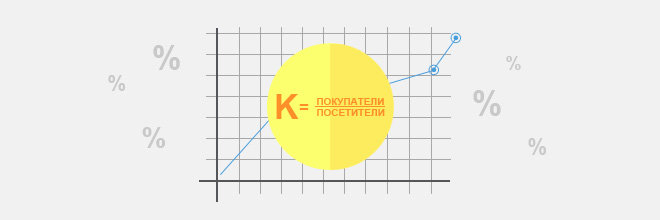
To determine how effective your website is, simply divide the number of actual sales by the total number of visits. The resulting figure is your conversion rate. Keep this number in mind and continuously strive to improve it, either on your own or with the help of experts. The final outcome will pleasantly surprise you.


