

5 Landing Page Conversion Killers
You’ve probably scoured the internet looking for answers to crucial questions about your landing page, only to come up empty-handed. Don't worry. We have highly actionable insights for anyone currently promoting their landing page to the masses.
We will discuss five critical mistakes that don't just limit your landing page's growth, but can completely destroy even the most meticulously crafted page. They can awaken the very monster that absolutely all digital marketers speak of with dread—the conversion eater.
So, who exactly makes up this terrible five?
Mismatch Between the Headline and the Ad
First place goes to the disconnect between the landing page and the advertisement. This is a very common issue: you see an engaging banner ad offering a discount on jeans. You click on it and land in a standard, generic clothing catalog. Unexpected, right? The immediate question arises: “Where are those jeans from the banner ad?” They might be somewhere on the site, but an average customer is highly unlikely to scour the webpage searching for hidden treasure.
The logical conclusion here is that a visitor must be sent directly to the page featuring those specific jeans. Furthermore, it is a great practice to ensure the product image on the landing page perfectly matches the one on the banner ad.

This rule strictly applies to pay-per-click (PPC) context ads as well. If a potential client clicks on an ad saying “buy an apartment in New York”, the targeted headline on the landing page should be at least highly relevant, if not identical.
While performing marketing audits for our clients, we've encountered this problem time and time again. High bounce rates and a visitor's reluctance to search the landing page are often simply due to the headline being only vaguely related to the ad copy.
Live Chat Mishaps
Another major stumbling block can be the live chat widget. On its own, it is a highly useful feature that serves as an excellent communication channel between the customer and the seller. Moreover, there are countless situations where the live chat becomes the exact deciding factor that convinces a client to choose your services over the competition.
For instance, imagine online shopping. There’s a fairly plain website, but it has an active live chat module. If this feature works flawlessly and the support agents promptly answer all the customer's inquiries, a sale is highly likely to happen.
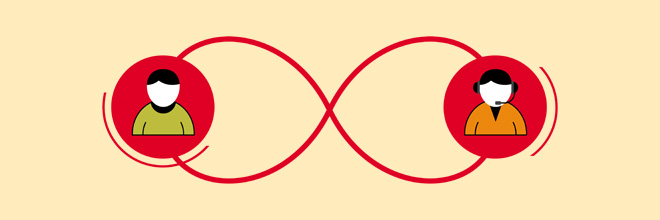
But there’s another scenario. A visitor lands on a beautifully designed website selling interior doors. It features cutting-edge design, tons of valuable information, high-quality content—basically, everything is perfect. Naturally, a few questions arise, and the user spots a live chat widget. The manager’s status says “online”, meaning they are ready to help. But alas: the questions disappear into the void, and the support operator is clearly busy with other things.
The solution to this problem is quite simple. First, never set your status to “online” if you cannot answer customer questions right away. Second, it is much better to completely hide the chat widget when you are offline.
Too Many Conflicting Calls to Action (CTAs)
Naturally, a landing page can have multiple calls to action. The real question is how they are designed and placed. Sometimes, three different buttons are positioned right next to each other, giving the visitor a choice. And, as we all know, giving too many choices in digital marketing is a bad idea. It is far more effective to place one single, clear CTA button in a strategic location, thereby prompting the client to click exactly where you want them to.
Lack of Contact Touchpoints
We are all human. And everyone has completely different preferences. Someone might find it convenient to talk on the phone, while others prefer email or Skype. Under no circumstances should you restrict your potential clients. A landing page absolutely must have a highly visible contact section where a phone number is prominently displayed.
This is, of course, a general overview. Later on, things might turn out differently: perhaps absolutely all your clients will end up using phone communication. But rest assured, by not providing an email address right from the start, you will lose a significant number of potential buyers.
Failing to A/B Test Your Offer
Right now, the internet is swarming with articles on A/B split testing. Webmasters tweak page colors, adjust elements, and rephrase headlines, all in the name of increasing the conversion rate. This is all great, of course, but what impacts conversions the most is actually the company’s core offer. You should try testing different pricing models, delivery times, guarantees, and unique brand features. It’s crucial to experiment with various options. The ultimate goal is to find that sweet spot where a simple change in the offer brings a flood of new clients to your website.
There are frequent cases where an agency or an online store significantly raises its prices. If the core offer remains completely unchanged, you can generally expect a drop in leads. However, if the landing page is properly adjusted to reflect added value, the lead volume might actually grow. The truth is, the price factor isn't the primary concern for everyone, and attracting clients from a different target segment might solve all your business problems.
Summary
If you are dissatisfied with your current conversion rate, pay close attention to these primary conversion killers. Fixing just one of them can exponentially increase the overall efficiency and profitability of your landing page.


